
Sale!

Solution Manual for Hydraulics in Civil and Environmental Engineering – Andrew Chadwick, John Morfett
$ 19.80
Textbook Solution Manual for Hydraulics in Civil and Environmental Engineering – 6th Edition Authors: Andrew Chadwick, John Morfett, Martin Borthwick Textbook and Solution Manual for Hydraulics in Civil and Environmental Engineering by Chadwick et al. are sold on this page. Please contact us if you need further information. First product provides the official Solution Manual for the book, covering Chapters 1–11. The Solution Manual is a PDF file which has 74 page pages. The total file size of this product is 4.37 MB. Please review the sample before purchasing. Download Sample for Solution Manual for Hydraulics in Civil and Environmental Engineering by Chadwick Skip to PDF content Second product is textbook for “Hydraulics in Civil and Environmental Engineering 6th Edition by Andrew Chadwick, John Morfett and Martin Borthwick”. It is an original PDF file with 653 pages. This product has a total size of 12 MB. Please check the sample provided below before buying. Download Sample for Hydraulics in Civil and Environmental Engineering by Chadwick Skip to PDF content List of covered chapters in the Solution Manual for Hydraulics in Civil and Environmental Engineering by Chadwick Chapter 1 – Hydrostatics Chapter 2 – Principles of fluid flow Chapter 3 – Behaviour of real fluids Chapter 4 – Flow in pipes and closed conduits Chapter 5 – Open channel flow Chapter 6 – Pressure surge in pipelines Chapter 7 – Hydraulic machines Chapter 8 – Wave theory Chapter 9 – Sediment transport Chapter 10 – Flood hydrology Chapter 11 – Dimensional analysis and the theory of physical models About the main textbook: Hydraulics in Civil and Environmental Engineering (6th Edition) by Andrew Chadwick, John Morfett, and Martin Borthwick is a widely used textbook that introduces the fundamental principles of hydraulics and their practical applications in civil and environmental engineering. The book is designed primarily for undergraduate and early graduate students, but it is also a useful reference for engineers and professionals working in water-related fields such as hydraulic engineering, environmental engineering, and water resources management. Hydraulics is the study of how fluids—especially water—behave in motion and at rest, and how engineers can control and use this behavior in real-world systems. This textbook provides a comprehensive explanation of the physical laws governing water flow and demonstrates how these principles are applied in engineering design and analysis. The authors combine theoretical explanations with practical examples, making the material accessible to students who may be encountering these concepts for the first time. The book begins with the fundamental properties of fluids, including density, viscosity, pressure, and fluid statics. These concepts form the basis for understanding how water behaves in natural and engineered systems. Students learn how pressure varies within fluids and how forces act on submerged surfaces and structures such as dams and gates. After establishing these foundations, the text explores fluid dynamics, which describes the motion of water in pipes, channels, and other systems. One of the key topics is the Bernoulli equation, which explains the relationship between pressure, velocity, and elevation in flowing fluids. This principle is essential for analyzing many engineering systems, including pipelines, pumps, and turbines. The authors then discuss flow in pipes, including laminar and turbulent flow, friction losses, and energy losses caused by fittings and valves. Engineers must account for these losses when designing water distribution systems, sewage networks, and industrial piping systems. The book also introduces methods for calculating pipe flow and designing efficient pipeline systems. Another important section of the book focuses on open channel flow, which deals with water moving in rivers, canals, and drainage channels. Topics such as uniform flow, critical flow, and gradually varied flow are explained in detail. Understanding these principles helps engineers design flood control systems, irrigation channels, and stormwater management infrastructure. The textbook also addresses hydraulic structures, including weirs, spillways, culverts, and dams. These structures are essential for controlling and directing water in civil engineering projects. The authors explain how engineers analyze water flow around these structures to ensure safety and efficiency. Environmental applications are also emphasized. Modern hydraulic engineering must consider sustainability and environmental impact, particularly when managing rivers, wetlands, and coastal systems. The book discusses how hydraulic principles can be applied to protect ecosystems, control flooding, and manage water resources responsibly. Throughout the text, the authors include numerous worked examples and practice problems that help students apply theoretical concepts to realistic engineering situations. Because some of these problems involve detailed calculations and engineering reasoning, many learners look for additional resources such as the Solution Manual for Hydraulics in Civil and Environmental Engineering by Chadwick, Morfett and Borthwick to better understand the step‑by‑step methods used to solve them. For students studying hydraulics, the Solution Manual for Hydraulics in Civil and Environmental Engineering by Chadwick, Morfett and Borthwick can serve as a helpful companion resource that clarifies complex exercises and supports independent learning. By reviewing detailed solutions, learners can verify their approaches and strengthen their understanding of hydraulic principles. Overall, Hydraulics in Civil and Environmental Engineering (6th Edition) remains an important educational resource because it integrates theoretical foundations, engineering applications, and environmental considerations in a clear and structured way. It equips students with the knowledge needed to analyze water systems and design effective hydraulic infrastructure. For those seeking additional guidance when working through the textbook exercises, the Solution Manual for Hydraulics in Civil and Environmental Engineering by Chadwick, Morfett and Borthwick can provide useful support alongside the main text. You can find more information about the textbook in this link. Our dedicated support is here to help. Contact us anytime if you need assistance. Page Contents Toggle Textbook Solution Manual for Hydraulics in Civil and Environmental Engineering – 6th EditionList of covered chapters in the Solution Manual for Hydraulics in Civil and Environmental Engineering by ChadwickAbout the main textbook
Related products
-
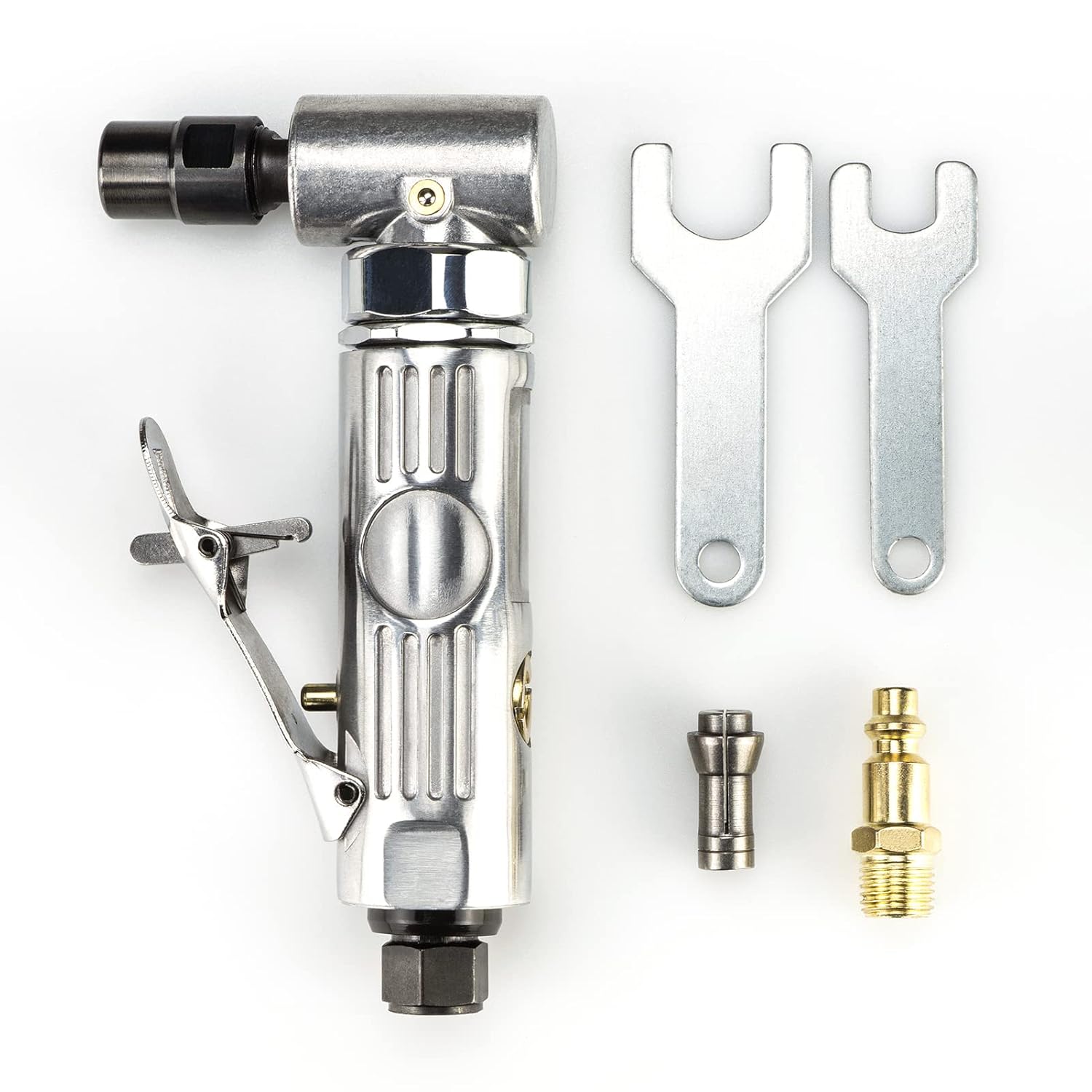 Air Angle Die Grinder, 0.25 hp and 21,000 RPM Motor, Lightwight Aluminum Body, Safety Lock, With 1/4″ 1/8″ Collets, Pneumatic Power Tool For Grinding and Polishing on Metalwork Woodwork
 -
 Air Cut off Tool, WP WORKPAD 3 inch Cut Off Tool with 5Pcs Die Grinder Cut Off Wheels,18000RPM, Pneumatic Cutting Machine Metal Sheet Cutter Tool Kit
 -
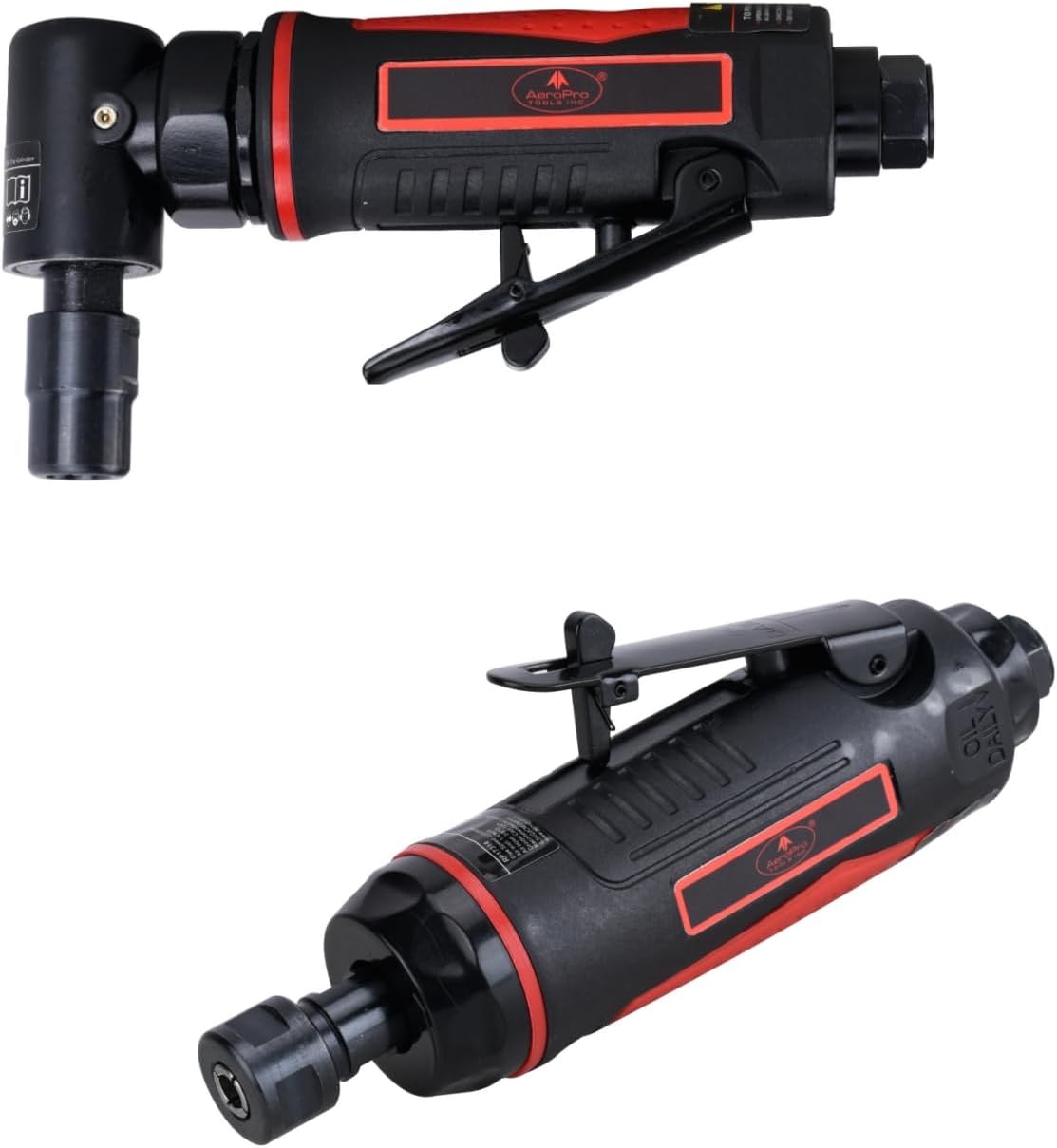 AEROPRO TOOLS AP17315 1/4″ Air Angle Die Grinder & AP17314 1/4″ Air Straight Die Grinder